
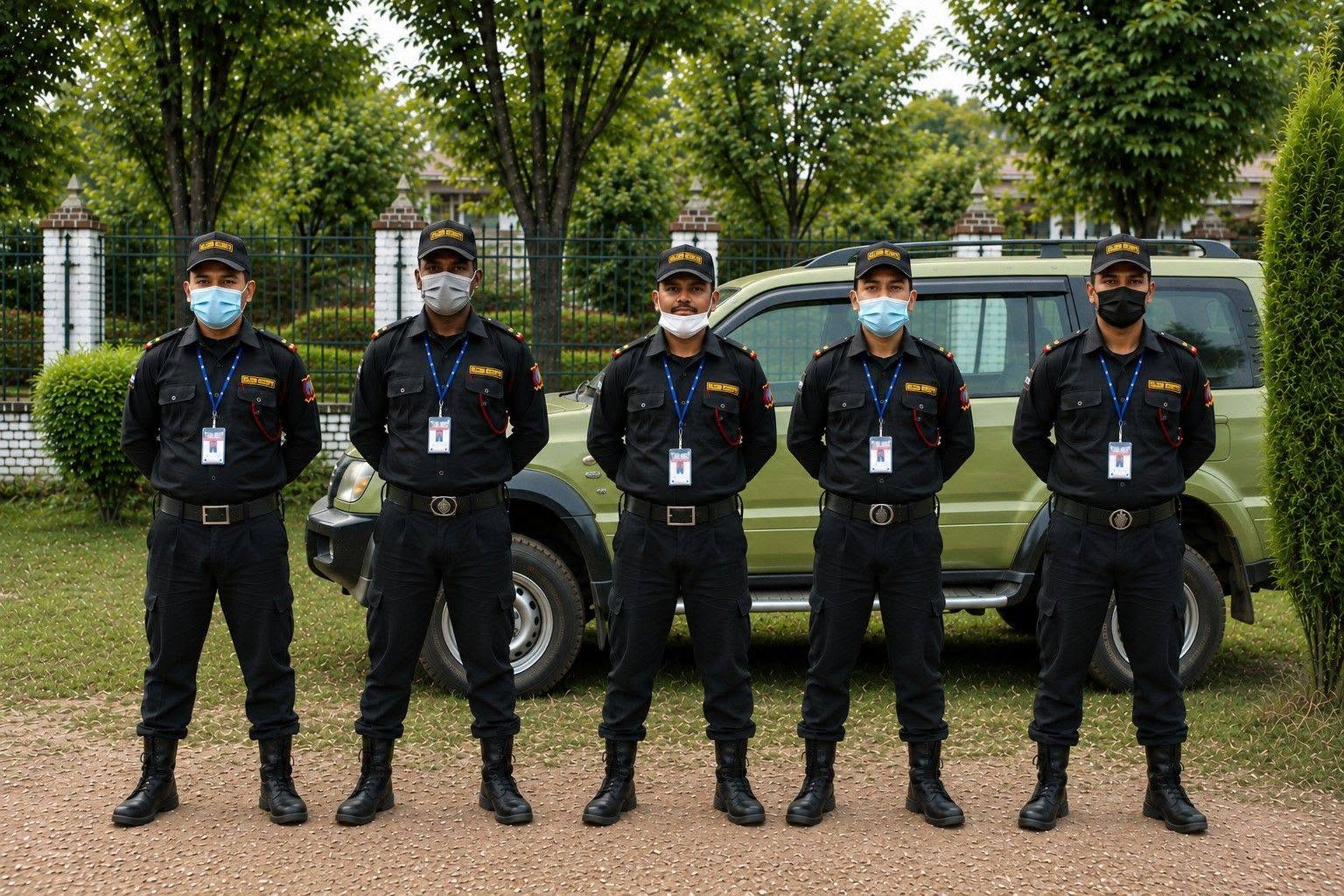
A practical security guide for apartment and housing colony committees in Kathmandu: gate rules, visitor checks, deliveries, night patrols and emergency plans.
Apartment buildings and housing colonies have grown quickly across Kathmandu. They bring families together, but they also bring shared responsibility. When dozens of households share one gate, one parking area and one set of stairs, security cannot be left to chance. For residents’ committees, getting guards is only the first step. The bigger task is setting clear rules so those guards can do their job well.
Agree on rules as a committee
Guards should not have to decide on the spot whether to let someone in. The committee should agree on simple rules, share them with all residents and give a copy to the guards.
- How visitors are allowed in: does the guard call the resident first?
- Where delivery riders can go: to the gate only, or to the door?
- Rules for domestic helpers, drivers and regular workers
- Gate opening and closing times, and procedure after hours
- Parking rules for residents and guests
- Who to call when there is a problem, day and night
Rules work best when residents follow them too. If committee members ask guards to make exceptions for their own guests, the system soon breaks down.
Gate and visitor control
The main gate is where most problems are stopped. A good routine includes:
- A visitor register recording name, phone number, flat number visited and time in and out
- Calling or messaging the resident before letting an unknown visitor in
- A list of regular helpers and workers, ideally with photos, kept at the gate
- Checking vehicles entering and leaving, especially late at night
- Keeping side gates and back entrances locked
Deliveries
Online shopping and food delivery mean many riders visit every day. Many committees choose to keep parcels at the gate for residents to collect, or to allow riders in only after the resident confirms. Either works if it is applied consistently.
Night security and patrols
At night, guards should do more than sit at the gate. Regular and random rounds of parking areas, stairwells, rooftops, water tanks and boundary walls help prevent theft and catch problems early, such as a tap left running, a car with lights on, or a smell of gas.
Good lighting helps the guard and deters intruders. The committee should fix broken lights quickly and make sure the guard has a working torch and a phone or radio.
Be ready for emergencies
Every residential building in Kathmandu should have a plan for earthquakes and fires. The committee and guards should agree on:
- A safe open assembly point away from buildings and power lines
- Who keeps the master keys and gate keys
- Location of fire extinguishers, gas shut-offs and the main electrical switch
- A list of elderly, sick or disabled residents who may need help
- Emergency numbers displayed at the gate
Generators and inverters, which many buildings still rely on during power cuts, should be kept clear of rubbish and stored fuel should be kept safely away from heat.
Working well with your guards
Guards do their best work when they are treated as part of the community. Introduce them to residents, give them clear instructions, listen to their reports and back them up when they apply the rules politely. Review the arrangement with the security company from time to time and raise concerns early.
Tilicho Security Service provides trained guards for homes, apartments and housing colonies across Kathmandu. Our guards are trained in access control, patrolling, fire safety, first aid and emergency response. If your committee is reviewing its security, talk to us from our office in Koteshwar.